
DeSCENDING
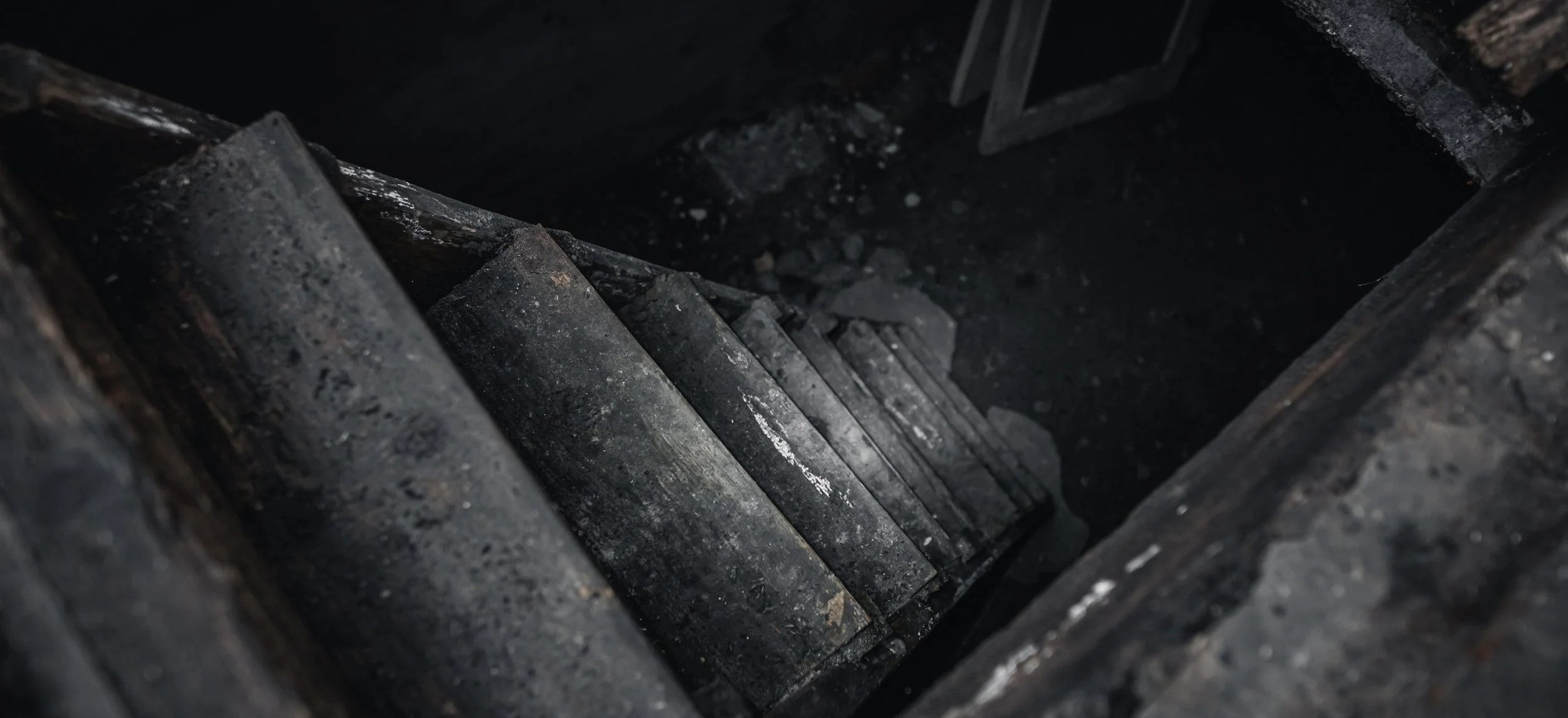
It is challenging to focus on descending into a place where the soul can search and roam, exploring our depths, in a culture so focused on getting better and better.
I never liked fictional stories or anything to feed the creative parts of myself, I was always more of a non-fiction girl myself. I always felt I had such little time on the earth and I should spend it reading self-help books and things that help me ascend. “Driven” is a choice word you could say about me for most of my life. But where was I going to go? Where would this ascent lead me?
Isn’t it funny how things work in this topsy turvy universe? Sometimes things are not as we think, and that is with grief and sorrow, descending to the lower depths brings something into our maturation and healing that ascending does not.
“At times grief invites us into a terrain that reduces us to our most naked self. We find it hard to meet the day, to accomplish the smallest of tasks, to tolerate the greetings of others. We feel estranged from the world and only marginally able to navigate the necessities of eating, sleeping and self care. Some other presence takes over in times of intense grief, and we are humbled, brought to our knees. We live close to the ground, the gravity of sorrow felt deep in our bones.”
Rituals
Chapter 2 of The Wild Edge of Sorrow opens with a recounted story of a grief ritual. Rituals offer us “containment” and “release”, which are two things necessary to truly let go and process our sorrow. I am no where near an expert on the subject, and am here learning about ritual and discovering that a big part of my own personal stuckness, is that my griefs and sorrows need somewhere to go. As long as I stay in a driven state of ascent, the weight I carry around will get heavier and more burdensome.
Francis Weller describes this descending as going down into the “souls halls”, and in order to be able to move freely in and out of the souls inner chambers, we must first clear the way.
Those who truly undertake mourning, return with a gravitas (which is where the word ‘grief’ derives) and they now carry wisdom, gathered in darkness. These are the men and women who have seen things, been through some serious crap, and become our elders– those with the ability to carry the village in times of hardship. They are the ones who are a container for us when we are in the midst of something we can’t process or understand.

Death Days
There was this girl who stumbled into our house of prayer in Roseville, CA years ago. She couldn’t have been more than 30, she was young, single, and sort of lost. We didn’t know what to make of her. She had straggly blond hair, a large puffy black winter coat and boots. She looked unkept, perhaps homeless, we didn’t know. Night after night she came into the prayer room and laid prostrate in the very front of the room. Dressed in all black, she would come, lay down, weep until it was almost closing time, and slip out. I would be leading worship watching this expression night after night. From time to time, she would lift her head or sit up, but didn’t engage with anyone at the prayer room. This went on for almost four months.
Eventually, I was able to catch her on the way out and get a bit of her story. Her name was Jessica and she was traveling through the states soul searching. She was on a journey to the depths of herself to connect with God in a difficult season of her life.
It left such an impression on me that I drew a picture of her in my journal lying on the floor and was driven to mourn myself. I labeled these journal entries ‘Death Days’, and I began fasting and mourning for several weeks. This girl went to the dark depths, and returned with gravitas– an elder.
To witness mindfully
What I am grasping now in this moment is the need to honor the losses, to acknowledge what has been lost, to be mindful about my losses. What I am most afraid of, is that in trying to move forward too quick, I could sever the memories of my life altogether. If we only want the good and not the painful, the sorting out of memories becomes an impossible task and it all gets ignored completely together. I am wondering if this amnesia, as Weller puts it, is linked to actual memory loss, from which I suffer.
I like to think that the traumas I have been through, the depths of loss I have mourned, might give me some small amount of ‘eldership’ that I could be useful as a container to others. This very possibility, this alone, is enough to connect with my losses, my disappointments, my pain and my grief.
I want to close with some final thoughts from Chapter 2 to consider.
“When survivors aren’t allowed sufficient time to grieve, the wounds close too soon, remain infected and never heal.”
“Grief asks that we honor the loss and, in so doing, deepen our capacity for compassion. When grief remains unexpressed, however, it hardens, becomes as solid as a stone. We in turn, become rigid and stop moving in rhythm with the soul. When we are in touch with all of our emotions, on the other hand, we are more verb than noun, more of a movement than a thing. But when our grief stagnates, we become fixed in a place, unable to move and dance with the flow of life. Grief is a part of the dance. ”

If you are trying to figure out where to start in prayer or grief work, you may want to check out my Recommended Reading list.
📌 As an Amazon affiliate, I may receive a small commission if you purchase through my links — at no extra cost to you. Thank you for supporting this blog!

Thank you for tuning into this series with me. This is deep work that is difficult to undertake and engage with for most. Much of what is shared here in this blog I am referencing comes from the book, “The Wild Edge of Sorrow”, by Francis Weller. If this is work you are feeling nudged to undertake, I encourage you to get the book and pray-read-journal too.
(*As an Amazon affiliate I may receive a small kickback from your purchases if you use my links.)